
Product Description
OEM CNC Machinery Wholesale Double Spur Gear Part Fabrication Plastic Gears for Toys
Product Description
1. Precision CNC machining parts strictly follow customer’s drawing,packing and quality requirement.
2. Tolerance: between+/-0.01mm;
3. The high-tech CMM inspector to ensure the quality;
4. Full-Experienced engineers and well professional trained workers;
5. Fast delivery time;
6. Professional advice for our customers;
Detailed Photos
Product Parameters
Our advantage of cnc machining:
| Business Type | Beyond the Manufacturer and strong organized ability in the industrial |
| Benefits | 1. Deeper industrial experience at CNC machining parts service for more than 10-years,our customer’s requirement is our 1st priority. 2. 2D or 3D files is available; 3. We trust the quality priority and we insist the good quality should be based on the customers’ satisfied; 4. Without any MOQ requirement; 5.Faster delivery time; 6. Customized size and specification /OEM available 7. Near ZheJiang Port |
The material
| Material System | Material Composition | Typical Applications |
| Low Alloy Steel | Fe-2Ni , Fe-8Ni | Automobile,machinery and other industries,particularly in structural parts |
| Stainless Steel | 316L,17-4PH,420,440C | Medical equipments, clocks,watches |
| Carbide | WC-Co | Various tools,clocks,watches |
| Ceramic | Al2O3 ,ZrO2 ,SiO2 | IT electronics, daily necessities,watches |
| Heavy Alloys | W-Ni-Fe,W-Ni-Cu,W-Cu | The arms industry, communications,daily necessities |
| Titanium | Ti,Ti-6Al-4V | Medical and firearm structural parts |
| Magnetic Materials | Fe,NdFeB,SmCo5,Fe-Si | Magnetic properties of the various components |
| Tool Steel | CrMo4,M2 | Tools |
| Table 2 Typical properties of several MIM materials: | |||||
| Materials | Density | Hardness | Tensile Strength | Elongation | |
| g/cm³ | Rockwell | Mpa | % | ||
| Fe-based alloys | MIM-2200(Sintered) | 7.65 | 45HRB | 290 | 40 |
| MIM-2700(Sintered) | 7.65 | 69HRB | 440 | 26 | |
| MIM-4605(Sintered) | 7.62 | 62HRB | 415 | 15 | |
| MIM-4605(Quenching and tempering) | 7.62 | 48HRC | 1655 | 2 | |
| Stainless steel | MIM-316L(Sintered) | 7.92 | 67HB | 520 | 50 |
| MIM-17-4PH(Sintered) | 7.5 | 27HRC | 900 | 6 | |
| MIM-17-4PH(Sintered) | 7.5 | 40HRC | 1185 | 6 | |
| MIM-430L(Sintered) | 7.5 | 65HRB | 415 | 25 | |
| Tungsten alloys | 95%W-Ni-Fe | 18.1 | 30 | 960 | 25 |
| 97%W-Ni-Fe | 18.5 | 33 | 940 | 15 | |
| Carbide | YG8X | 14.9 | HRA90 | Bending Strength 2300 | |
| Fine Ceramics | Al2O3 | 3.98 | HRA92 | Bending Strength 2300 | |
Packaging & Shipping
- We prefer DHL or TNT express or other air freight between 1kg-100kg.
- we prefer sea freight more than 100kg or more than 1CBM
- As per customized specifications.
Company Profile
About us
HangZhou CHINAMFG Technology Co.,Ltd is located in HangZhou City, ZheJiang Province, Which closed the ZheJiang .The Emitech Technology is mainly engaged in the CNC Machinery Industrial Service for 15 years. Our Parts are sold to Europe, America, Japan, South Korea and China in various kinds of industrial.At present, Our company has CNC Turning machines and CNC centers and equip with professional quality and testing instruments.We have full OEM Experience from worldwide, providing them with One-stop solutions for a broad range of applications.We look CHINAMFG to cooperating with you!
Our Advantages
1. Precision CNC machining parts strictly follow customer’s drawing,packing and quality requirement.
2. Tolerance: between+/-0.01mm;
3. The high-tech CMM inspector to ensure the quality;
4. Full-Experienced engineers and well professional trained workers;
5. Fast delivery time;
6. Professional advice for our customers;
After Sales Service
Custom CNC machining Services brass aluminium stainless steel cnc parts
We usually provide 12 Months repair service. If our duty, we will respond to send the new parts.
Our Service
| Our Processing | CNC center, CNC milling, CNC turning, drilling, grinding, bending, stamping, tapping, |
| Surface finish | Polishing, sandblasting,Zinc-plated, nickel-plated, chrome-plated, silver-plated, gold-plated, imitation gold-plated, |
| Tolerance | 0.05mm~0.1mm |
| QC System | 100% inspection before shipment |
| Drawing format | CAD / PDF/ DWG/ IGS/ STEP |
| Packaging | Plastic bag/Standard package / Carton or Pallet / As per customized specifications |
| Payment Terms | 30 -50%T/T in advance, 70-50% balance before delivery; Pay Pal or Western Union is acceptable. |
| Trade terms | EXW, FOB, CIF, As per the customer’s request |
| Shipment Terms |
1)We prefer DHL or TNT express or other air freight between 1kg-100kg. 2) we prefer sea freight more than 100kg or more than 1CBM |
| Note | The CNC machining parts are usually custom-made based on the customer’s drawings and samples. So we need the Down Payment |
| After-sales Service: | Repaire |
|---|---|
| Warranty: | Half a Year |
| Condition: | New |
| Certification: | CE, RoHS, GS, ISO9001 |
| Standard: | DIN, ASTM, GOST, GB, JIS, ANSI, BS |
| Customized: | Customized |
| Customization: |
Available
| Customized Request |
|---|
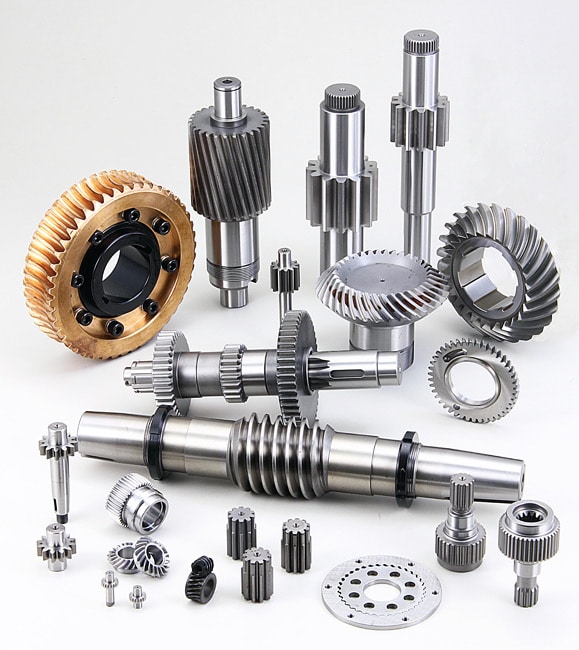
What lubrication is required for a worm gear?
The lubrication requirements for a worm gear system are crucial to ensure smooth operation, reduce friction, prevent wear, and extend the lifespan of the gears. The specific lubrication needed may vary depending on factors such as the application, operating conditions, gear materials, and manufacturer recommendations. Here are some key considerations regarding lubrication for a worm gear:
- Lubricant selection: Choose a lubricant specifically designed for gear applications, taking into account factors such as load, speed, temperature, and environment. Common lubricant types for worm gears include mineral oils, synthetic oils, and greases. Consult the gear manufacturer’s recommendations or industry standards to determine the appropriate lubricant type and viscosity grade.
- Viscosity: The lubricant viscosity is critical for effective lubrication. The viscosity should be selected based on the operating conditions and gear design parameters. Higher loads and slower speeds typically require higher viscosity lubricants to ensure sufficient film thickness and protection. Conversely, lower viscosity lubricants may be suitable for lighter loads and higher speeds to minimize power losses.
- Lubrication method: The lubrication method can vary depending on the gear system design. Some worm gears have oil sumps or reservoirs that allow for oil bath lubrication, where the gears are partially submerged in a lubricant pool. Other systems may require periodic oil application or greasing. Follow the gear manufacturer’s guidelines for the appropriate lubrication method, frequency, and quantity.
- Temperature considerations: Worm gear systems may encounter a wide range of temperatures during operation. Ensure that the selected lubricant can withstand the anticipated temperature extremes without significant degradation or viscosity changes. Extreme temperatures may require specialized high-temperature or low-temperature lubricants to maintain proper lubrication performance.
- Maintenance and monitoring: Regular maintenance and monitoring of the lubrication are essential for optimal gear performance. Periodically inspect the lubricant condition, including its cleanliness, viscosity, and contamination levels. Monitor operating temperatures and perform oil analysis if necessary. Replace the lubricant at recommended intervals or if signs of degradation or contamination are observed.
It’s important to note that the lubrication requirements may vary for different worm gear applications, such as automotive, industrial machinery, or marine systems. Additionally, environmental factors such as dust, moisture, or chemical exposure should be considered when selecting a lubricant and establishing a lubrication maintenance plan.
Always refer to the gear manufacturer’s recommendations and guidelines for the specific lubrication requirements of your worm gear system. Adhering to proper lubrication practices helps ensure smooth and reliable operation, minimizes wear, and maximizes the gear system’s longevity.
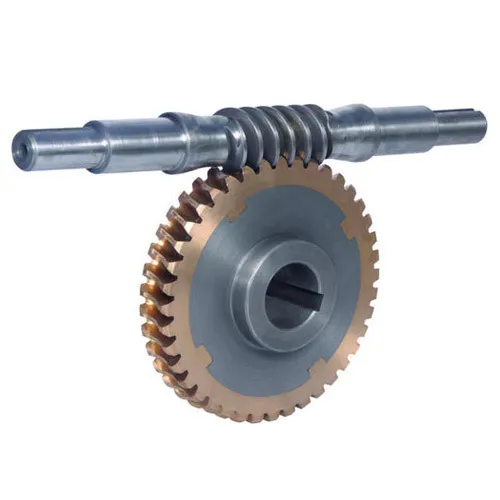
How do you retrofit an existing mechanical system with a worm gear?
When retrofitting an existing mechanical system with a worm gear, several considerations need to be taken into account. Here’s a detailed explanation of the retrofitting process:
- Evaluate the existing system: Before proceeding with the retrofit, thoroughly assess the existing mechanical system. Understand its design, function, and limitations. Identify the specific reasons for considering a worm gear retrofit, such as the need for increased torque, improved efficiency, or enhanced precision.
- Analyze compatibility: Evaluate the compatibility of a worm gear with the existing system. Consider factors such as available space, structural integrity, alignment requirements, and the load-bearing capacity of the system. Ensure that the addition of a worm gear will not compromise the overall performance or safety of the system.
- Select the appropriate worm gear: Based on the requirements and constraints of the retrofit, choose a suitable worm gear. Consider factors such as gear ratio, torque capacity, efficiency, backlash, and mounting options. Select a worm gear that matches the specific needs of the retrofit and is compatible with the existing system.
- Modify or adapt the system: Depending on the compatibility analysis, it may be necessary to modify or adapt certain components of the existing system to accommodate the worm gear. This can involve making adjustments to shafts, bearings, housings, or other mechanical elements. Ensure that any modifications or adaptations are carried out with precision and adhere to industry standards.
- Install the worm gear: Install the selected worm gear into the modified or adapted system. Follow the manufacturer’s instructions and guidelines for proper installation. Pay attention to torque specifications, lubrication requirements, and any specific assembly procedures. Ensure that the worm gear is securely mounted and aligned to minimize misalignment and maximize performance.
- Test and optimize: After the installation, thoroughly test the retrofitted system to ensure its functionality and performance. Conduct tests to verify torque transmission, efficiency, backlash, noise levels, and any other relevant parameters. Monitor the system during operation and make any necessary adjustments or optimizations to fine-tune its performance.
- Document and maintain: Document the retrofitting process, including any modifications, adjustments, or optimizations made to the existing system. Keep records of installation procedures, test results, and maintenance activities. Regularly inspect and maintain the retrofitted system to ensure its continued performance and reliability.
It’s important to note that retrofitting an existing mechanical system with a worm gear requires expertise in mechanical engineering and an understanding of the specific system requirements. If you lack the necessary knowledge or experience, it is advisable to consult with professionals or engineers specializing in power transmission systems to ensure a successful retrofit.
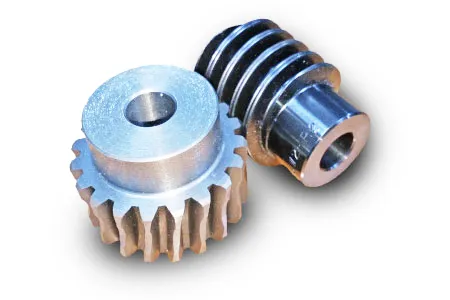
What are the applications of a worm gear?
A worm gear is a type of gear mechanism that consists of a threaded worm and a mating gear, known as the worm wheel or worm gear. It is widely used in various applications where a high gear ratio and compact size are required. Here are some specific applications of worm gears:
- Elevators and Lifts: Worm gears are extensively used in elevator and lift systems. They provide the necessary gear reduction to lift heavy loads while maintaining smooth and controlled vertical movement.
- Steering Systems: Worm gears are commonly found in automotive steering systems. They convert the rotational motion of the steering wheel into the linear motion required to turn the vehicle’s wheels.
- Conveyors: Worm gears are employed in conveyor systems, particularly for applications that require moving materials at an inclined angle. They offer the necessary torque and control for efficient material handling.
- Machine Tools: Worm gears are used in machine tools such as milling machines, lathes, and grinders. They enable precise control over the machine’s speed and feed rate, resulting in accurate machining operations.
- Packaging Equipment: Worm gears are utilized in packaging machinery to drive various components such as conveyor belts, rotary tables, and filling mechanisms. They ensure synchronized and efficient packaging processes.
- Rotary Actuators: Worm gears find applications in rotary actuators, which are used in robotics, industrial automation, and valve control. They provide precise positioning and torque output for rotational movements.
- Textile Machinery: Worm gears are employed in textile machinery for applications like yarn winding, loom mechanisms, and fabric tensioning. They ensure smooth and controlled movement of threads and fabrics.
- Raising and Lowering Mechanisms: Worm gears are used in raising and lowering mechanisms, such as those found in stage platforms, scissor lifts, and adjustable workbenches. They enable controlled vertical movement with high load capacity.
These are just a few examples of the applications of worm gears. Their unique characteristics, including high gear reduction ratios, compact size, and self-locking capabilities, make them suitable for a wide range of industries and mechanical systems.


editor by CX 2023-09-27